Compression Moulding — Diyarbakır, Turkey
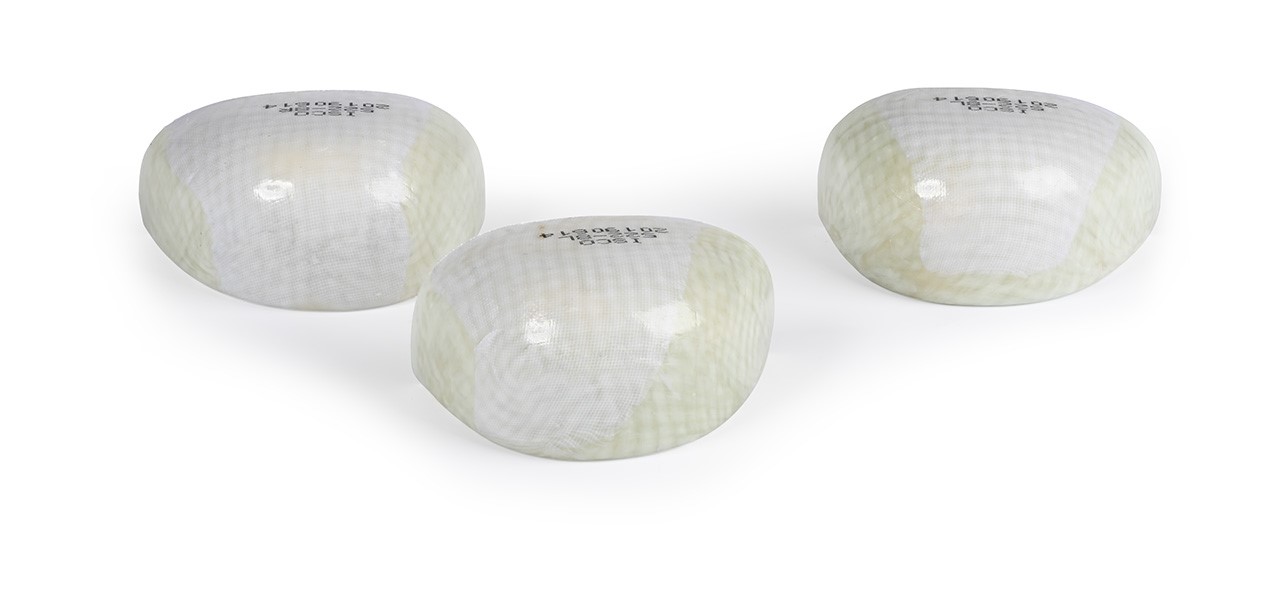
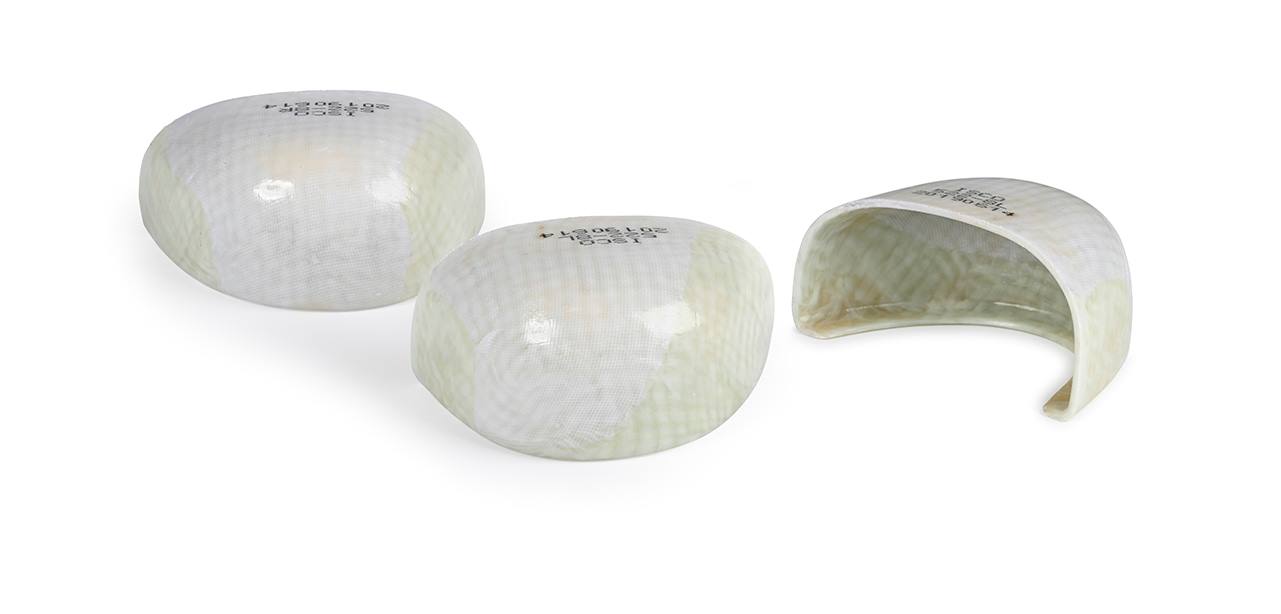
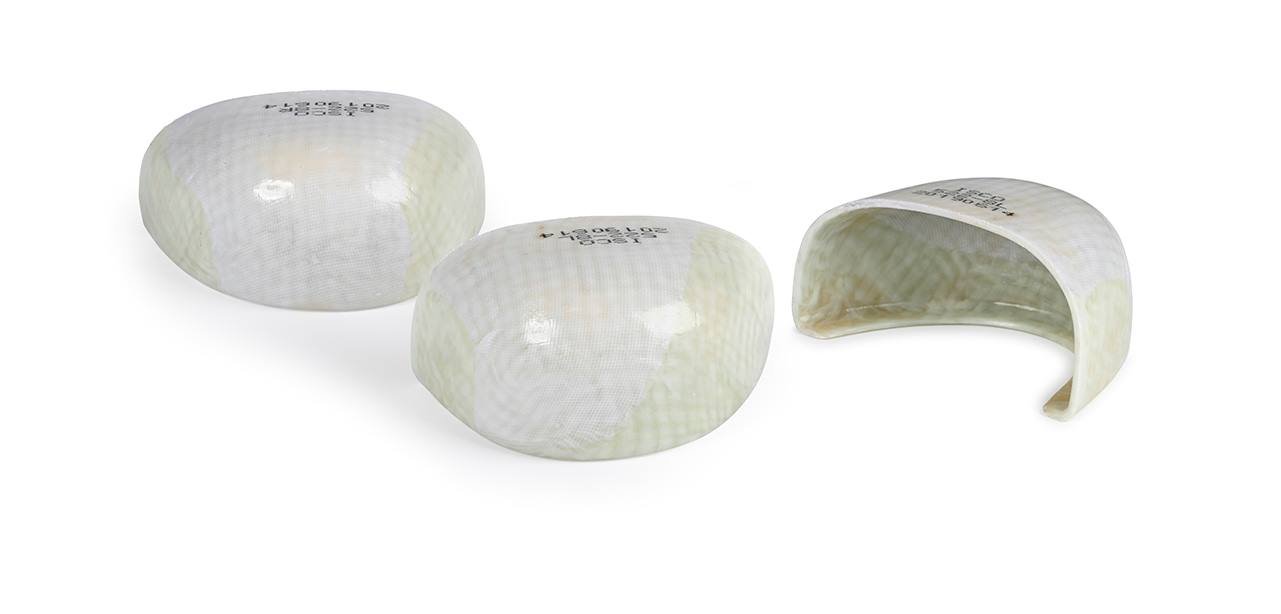
We have spent years perfecting one thing: compression moulding glass fibre and thermoset resin into small, thick-walled components that have to take a beating — and be certified for it. Every toecap we make is type-examined to withstand a 200 joule impact and a 15 kilonewton compression load. That capability is not limited to safety footwear. Tell us what your component has to withstand.
Any moulder can press glass fibre and resin. Far fewer can put a component in front of a notified body, pass type examination, and then hold that standard through years of ongoing factory surveillance. We do — every fibre composite toecap we manufacture is certified to EN ISO 22568-2, which demands a 200 joule impact and a 15 kilonewton compression load with no cracking through the material, no delamination and no sharp edges.
That quality system does not care what the part is for. If your component has to demonstrate a mechanical, electrical or load-bearing performance against a standard, the discipline that gets it there is the discipline we run every day.
Thermoset composite is unforgiving — the cure reaction is irreversible and scrap cannot be reprocessed. Consistency is not a target, it is the entire discipline.
Hydraulic presses with temperature-controlled matched metal tooling. Uniform wall thickness, controlled shrinkage and no delamination — held across full production runs, not just on samples.
Sheet and bulk moulding compounds selected for the job: mechanical grades where the part carries load, electrical grades where dielectric strength, arc resistance and tracking resistance decide the specification.
Hardened steel moulds, pre-heated and monitored for temperature uniformity across the whole cavity. Uneven temperature means uneven cure and dimensional drift, so the tool is treated as part of the process, not as a fixture.
Impact and compression testing in our own laboratory, on site, on production parts rather than on prototypes. Full batch documentation accompanies every shipment.
Third-party type examination with ongoing factory surveillance, REACH-compliant production documentation, and a facility you are welcome to audit in person.
Built for repeat volume rather than one-offs. Once your tool exists it stays with us, and the part comes back identical, year after year.
Thermoset composite earns its place where metal has a real disadvantage — it conducts, it corrodes, it is heavy, or it is worth stealing.
Busbar supports, circuit breaker bases and covers, terminal blocks, arc chutes and motor end shields. BMC is the reference material here for a reason: dielectric strength, arc resistance and tracking resistance that no thermoplastic matches.
Composite covers have no scrap value, so they are not stolen. They weigh a fraction of cast iron, so one person can lift them. They do not conduct, so they are safe above live cable runs. And they do not corrode in a chamber full of effluent.
Meter boxes, connection cabinets and charge point housings that stay outdoors for decades — flame retardant, UV stable and sealed, where a painted steel box would need attention long before.
Covers and housings for stationary battery and solar installations, where flame retardance during a thermal event and electrical isolation are safety requirements rather than preferences.
Wherever a component has to absorb a defined impact and prove that it did. This is the discipline we built the factory around, and it is the one we are asked about most.
Compression moulding suits small to medium, thick-walled, highly loaded parts in series. It is not the right process for continuous profiles, large structural laminates or woven fibre laminates — and we will tell you so rather than take the tooling order.
Most compression moulded electrical and infrastructure components reach Europe from Asia. That has become a liability: long lead times, shipping exposure, quality oversight at a distance, and growing regulatory pressure on European buyers to diversify away from single-country sourcing.
Turkey and the EU share a customs union for industrial goods. Components from our Diyarbakır facility enter the European market without import duty, on far shorter lead times than Asia, from a plant you can audit in person and reach in a morning's flight.
Already proven at scale in Europe
The Diyarbakır plant was built to supply European safety footwear brands with a component they could previously only source from Asia. It has done exactly that, under continuous third-party surveillance, for years.
The same presses, the same laboratory and the same quality system are available for your component.
Four steps, and an honest answer at the end of the first one.
Send a drawing, a sample, or simply the performance the part has to deliver — the load, the impact, the voltage, the standard it must meet. We select the compound grade and tell you whether our process suits your part. If it does not, we say so.
Matched metal tooling is designed and built for your component. The tool then stays with us, so every repeat order starts without set-up time.
First parts are measured and tested in our own laboratory against your specification before the series runs. You receive the results, not just the parts.
Repeat volume with full batch documentation, from a certified facility inside the European customs union — with the same part geometry every year.
Where we make it
Purpose-built compression moulding infrastructure, an on-site test laboratory, and the certification history behind every component we mould.
The component that proved it
200 joules and 15 kilonewtons, in a part that weighs almost nothing — the full technical case for the component this capability was built around.