New Factory · Opened 2025 · Diyarbakır, Turkey
Isco International is the only manufacturer on the European continent producing fibre composite (fiberglass) toecaps. Lightweight, non-metallic, thermally insulating — and now available from a dedicated European factory for the first time in the history of the industry.
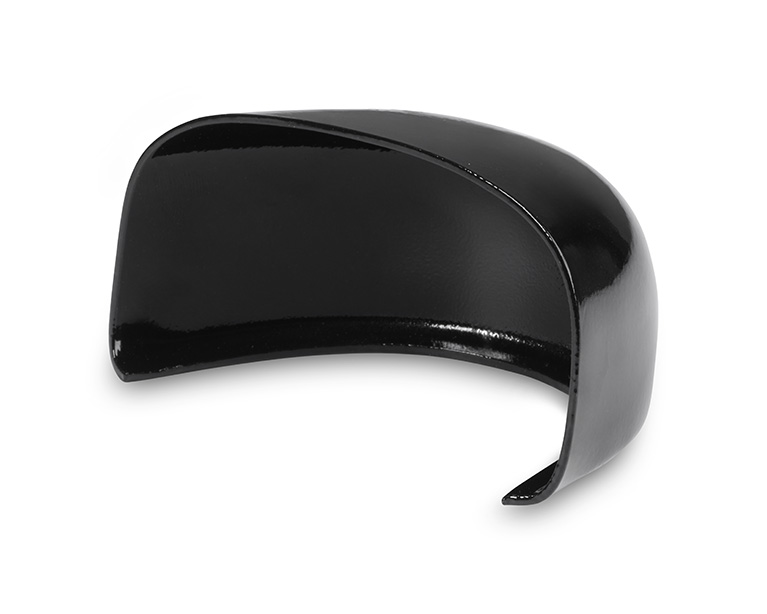
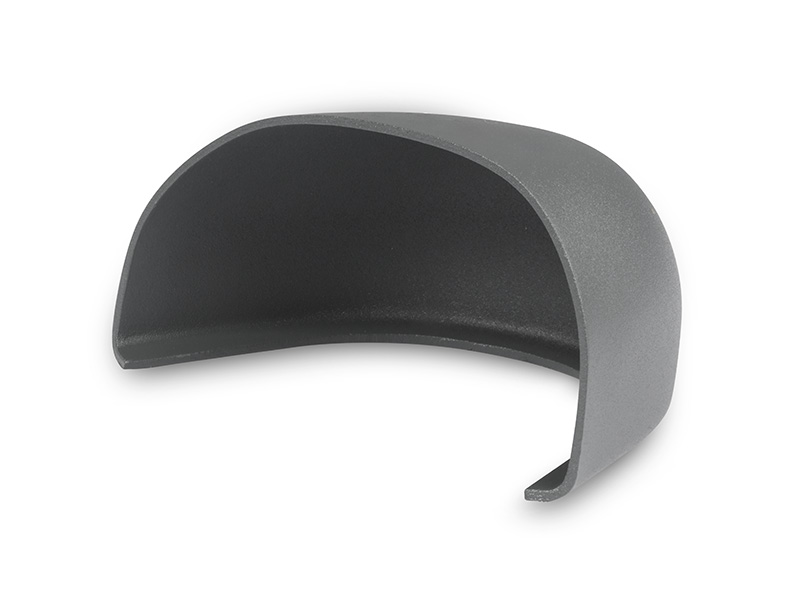
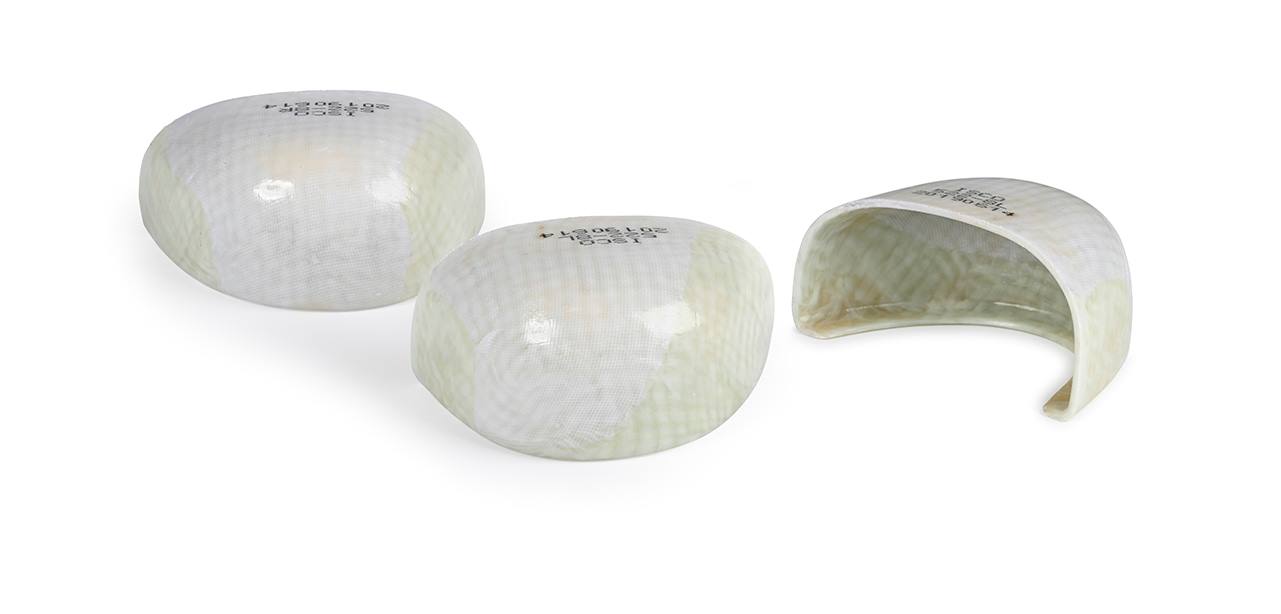
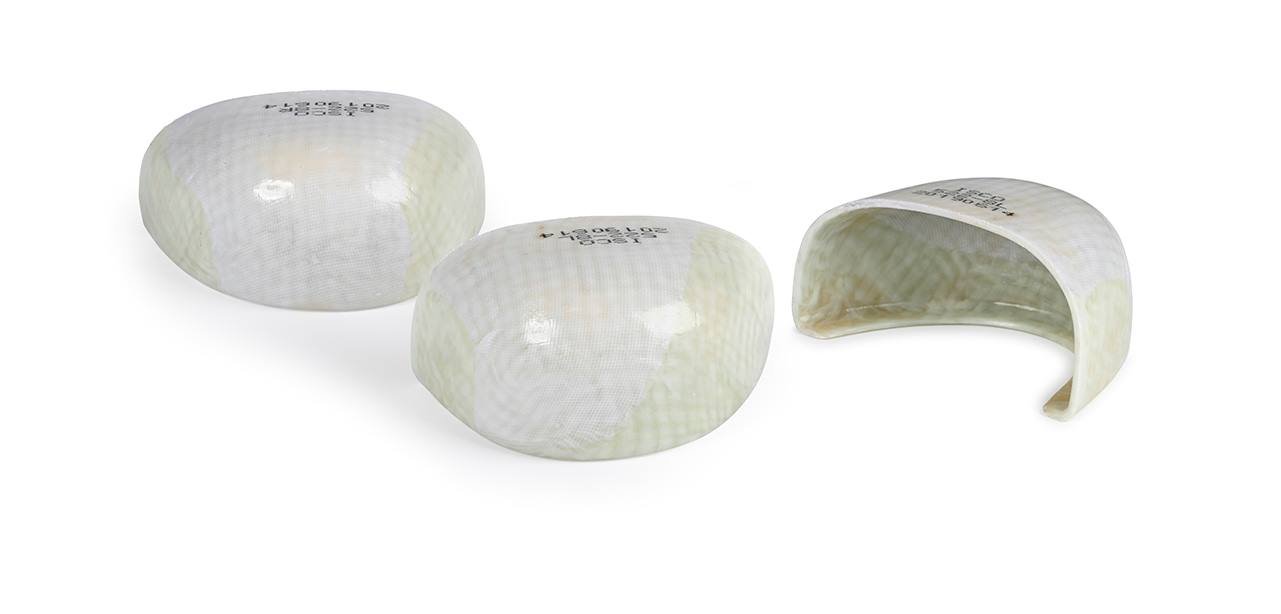
A fibre composite toecap is a safety footwear component formed from woven fiberglass reinforcement embedded in a high-strength polymer resin matrix. The result is a structural shell that is completely non-metallic, yet capable of meeting the same 200-Joule impact and 15 kN compression requirements as a steel toecap.
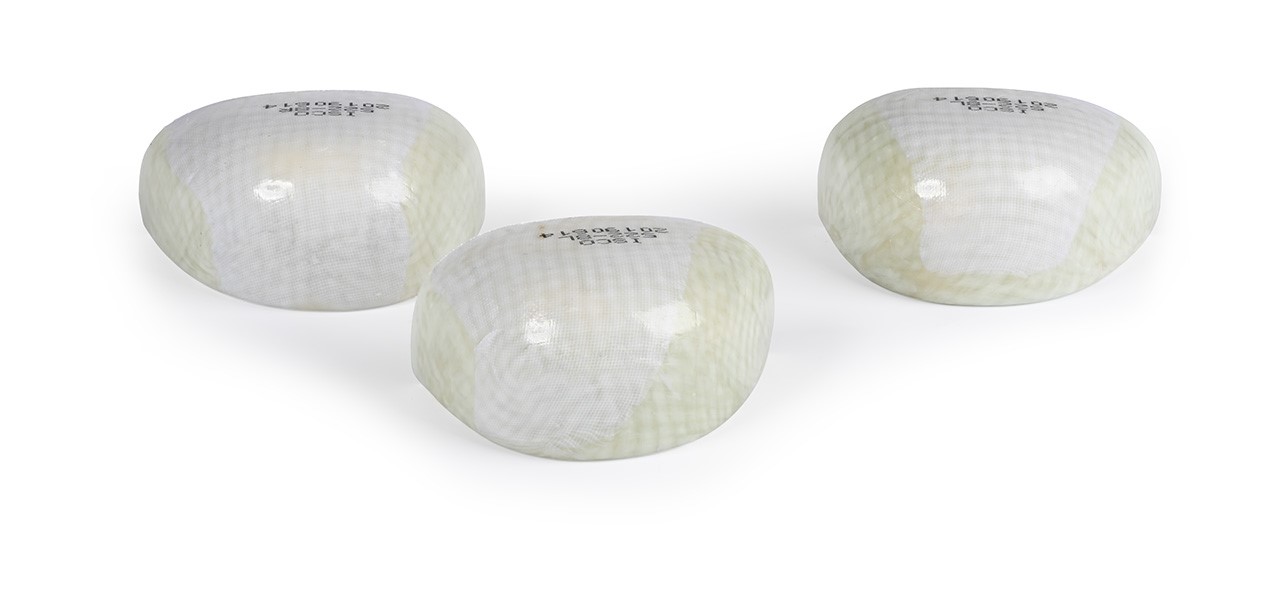
Unlike simple plastic or TPU composite toecaps, which derive their strength from polymer mass, a fibre composite toecap uses the fiberglass reinforcement matrix to achieve a far superior strength-to-weight ratio. The fiberglass structure is visible in the characteristic woven surface texture that distinguishes these toecaps.
The production process is technically demanding — requiring specialist compression moulding equipment, precise temperature and pressure control during curing, and exact management of fibre orientation. This is precisely why, until Isco opened its Diyarbakır facility in 2025, no such production existed in Europe.
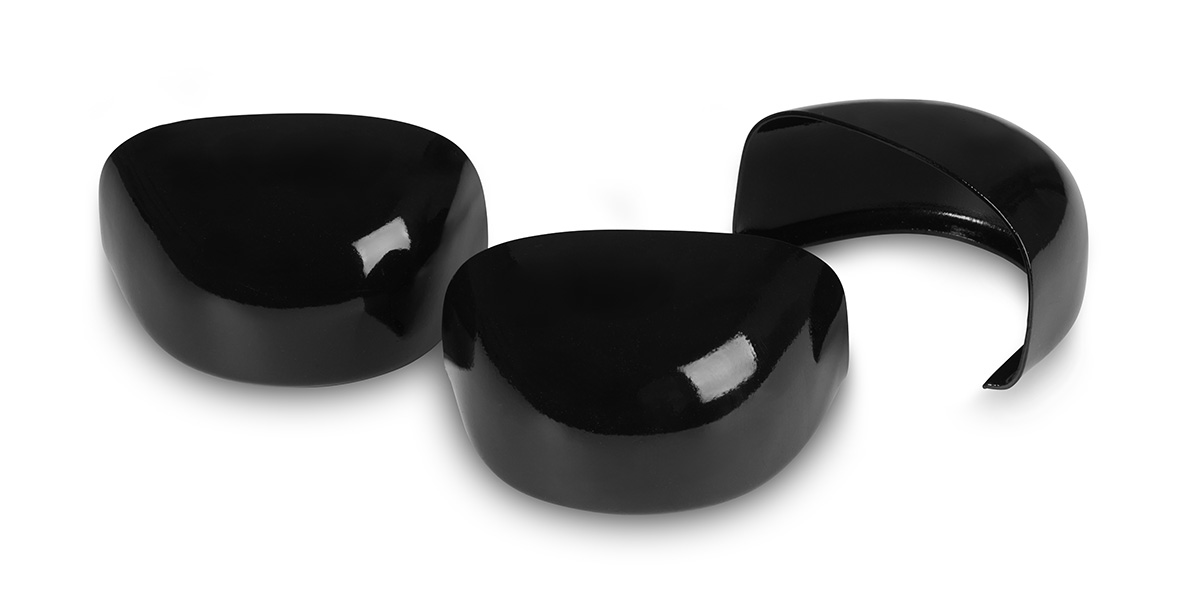
Why shoe designers and safety brands increasingly specify fibre composite toecaps over metal alternatives.
A fibre composite toecap is up to 50% lighter than an equivalent steel toecap. For workers on extended shifts — eight, ten, twelve hours on their feet — this reduction in weight directly translates to less fatigue, better comfort and improved productivity.
~50% lighter than steelNo metal content whatsoever. Fibre composite toecaps pass all metal detection systems — a mandatory requirement for food manufacturing, pharmaceutical production, aviation facilities, secure government sites and any workplace operating security or contamination scanning.
Zero metal contentSteel is 160× more thermally conductive than fiberglass — in freezer environments, a steel toecap acts as a cold bridge that accelerates heat loss from the foot. In cold stores at −18°C to −30°C, this is a genuine occupational health issue. Fiberglass conducts virtually no heat or cold, keeping the toecap thermally neutral across the full working temperature range.
160× less conductive than steelFiberglass is a natural electrical insulator with zero conductivity. For workers in electrical utilities, power distribution, telecommunications infrastructure, or any environment with live cables or exposed electrical components, an electrically non-conductive toecap eliminates one more pathway for electrical energy to reach the foot.
0 S/m electrical conductivityFibre composite does not rust, corrode or degrade in the presence of water, humidity, saline environments, cleaning chemicals, acids, alkalis or industrial solvents. Where a steel toecap would oxidise over time and require replacement, a fibre composite toecap maintains its structural integrity and appearance across its full service life.
Isco fibre composite toecaps carry full EN ISO 20345:2022 certification and comply with EN ISO 22568-2:2019 — the component standard for non-metallic toecaps. They pass the same 200-Joule impact test and 15 kN compression test as a steel toecap. Choosing fibre composite involves no compromise on protection level — only on material properties and weight.
EN ISOThe properties of fibre composite toecaps make them the preferred — or required — specification in these sectors.
In cold stores operating at −20°C to −30°C, metal toecaps become painfully cold. The thermal non-conductivity of fibre composite eliminates this problem entirely — workers stay warm without any insulating insole workaround.
Metal detection is mandatory at most food and pharmaceutical production lines. Fibre composite toecaps pass these systems without triggering false positives — keeping lines running and eliminating shoe changes at detection gates.
Ground handlers, ramp crews and maintenance technicians work alongside security screening equipment daily. Metal-free footwear eliminates complications at checkpoints. ESD-safe environments in avionics require non-conductive components throughout.
Electricians, cable layers, substation operators and infrastructure maintenance crews benefit from electrically non-conductive toecaps as one element of a comprehensive electrical protection strategy. No conduction pathway through the toecap.
Sensitive component assembly and testing environments require ESD control throughout. Non-metallic, non-conductive toecaps are compatible with ESD footwear grounding systems and do not interfere with static-sensitive processes.
Outdoor workers in Nordic climates, oil fields, wind farms, and remote infrastructure benefit from thermal non-conductivity in winter and non-corrosive properties in marine, coastal and wet environments. Fibre composite does not rust — ever.
Producing fibre composite toecaps is not a task that can be added to an existing metal stamping line. It requires purpose-built infrastructure: specialist compression moulding presses, climate-controlled materials storage, precise curing ovens, and dedicated tooling for each toecap profile. The investment is substantial — and the technical barrier to entry is high.
For this reason, every other European brand specifying fibre composite toecaps has until now been forced to source them from manufacturers in Asia — with all the associated lead times, logistics risk and supply chain opacity that implies.
Isco changed that in 2025. Our Diyarbakır facility was built from the ground up to produce fibre composite toecaps — and only fibre composite toecaps. It is the first facility of its kind on the European continent, and currently the only one. It began full production in 2025 and is now entering its second year of uninterrupted supply.
Built exclusively for fibre composite toecap production. No shared lines, no compromise — every piece of equipment is configured for this product.
Compression moulding presses, precision curing ovens and automated quality inspection — all installed new when the facility opened in 2025.
No intercontinental shipping. No Asian lead time. Full REACH compliance and EU supply chain traceability from raw fibre to finished toecap.
EN ISO 22568-2:2019 certification. On-site quality laboratory. Full batch documentation and traceability. ISO 9001 quality management system throughout.
Before 2025, every European safety shoe brand sourcing fibre composite toecaps had a single option: import from Asia. That meant 8–12 week lead times, exposure to shipping disruption, limited ability to adjust orders mid-season, and no European supply chain traceability documentation.
Isco's Diyarbakır facility changes the equation. European production means faster delivery, flexibility on order sizes, full REACH and due diligence compliance, and a supplier relationship you can actually manage — from the same time zone, in your language, with European business standards.
All Isco fibre composite toecaps are manufactured and tested to the following standards and performance requirements. Full certification documentation is available on request.
Request Technical Data Sheet →| Component Standard | EN ISO 22568-2:2019 |
| Footwear Standard | EN ISO 20345:2022 |
| Impact Resistance | 200 Joules |
| Compression Resistance | 15 kN |
| Material | Fiberglass reinforced polymer resin |
| Metal Content | None — 100% non-metallic |
| Thermal Conductivity | Non-conductive |
| Electrical Conductivity | Non-conductive (insulator) |
| Corrosion Resistance | Full — no rust or degradation |
| Weight vs Steel | Approx. 50% lighter |
| Production Location | Diyarbakır, Turkey (European continent) |
| Quality System | ISO 9001 |
Everything you need to know about fibre composite toecaps and our European production.
A fibre composite toecap is a safety footwear component made from woven fiberglass reinforcement in a hardened polymer resin matrix. It is 100% non-metallic, thermally and electrically non-conductive, and approximately 50% lighter than an equivalent steel toecap — while meeting the same EN ISO 20345 impact and compression protection requirements. It complies with EN ISO 22568-2:2019, the international standard for non-metallic toecap components.
Yes. Fibre composite toecaps undergo identical testing to steel toecaps: 200-Joule impact test and 15 kN compression test, both conducted at ambient temperature and at temperature extremes. The certification standard differs (EN ISO 22568-2 for non-metallic vs EN ISO 22568-1 for metallic) but the performance requirements are equivalent. Both are rated for the same protection level under EN ISO 20345.
Producing fibre composite toecaps requires specialist compression moulding equipment, precise curing ovens, specific fibre orientation tooling and dedicated quality processes — none of which can simply be added to an existing metal toecap production line. The capital investment and technical know-how required are significant barriers. Isco made this investment in 2025, building a purpose-built facility in Diyarbakır, Turkey — the first and still the only facility of its kind on the European continent.
European production eliminates 8–12 week intercontinental lead times. It gives you a supplier in your time zone, speaking your language, operating under European business and quality norms. It provides full REACH compliance documentation for EU supply chain due diligence requirements. It eliminates exposure to port congestion, container shortages and geopolitical disruption. And it gives you the flexibility to adjust order quantities mid-season in a way that Asian supply chains cannot accommodate.
Yes. Contact our team in Dongen and we will arrange samples with full certification documentation from the Diyarbakır production facility. We can also supply technical data sheets, specification drawings and test reports to support your qualification process.